
Bifrequency Music is a special project of Jerusalem Rivers. By listening to binaural music the reading of the scriptures can be enhanced. Below is a description of this dicipline from Google AI
Brain entrainment music uses specific rhythmic sounds, tones, or binaural beats to encourage brainwaves to align with a particular frequency, promoting states like deep relaxation, focus, or sleep. By tapping into the brain’s “frequency following response,” this audio aids in reducing anxiety, enhancing meditation, and improving cognitive function by influencing neural activity.National Institutes of Health (.gov)
- Frequency Following Response: The brain naturally synchronizes its own electric waves to the rhythm of external stimuli, such as music or binaural beats.
- Binaural Beats: A common technique where two slightly different frequencies are played in each ear, causing the brain to perceive a third tone that stimulates specific brainwave patterns.
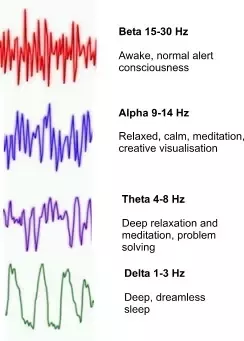
- Targeted Brain States:
- Delta (): Used for deep, restorative sleep.
- Theta (): Used for deep meditation and creativity.
- Alpha (): Promotes calm, relaxed alertness.
- Beta (): Used to enhance concentration and cognitive performance.
- Applications: It is frequently used for anxiety relief, insomnia management, and increasing focus.
- Gamma: Dynamic and powerful wave yielding great benefits.
Origins: The technique is based on entrainment principles, first identified in the 17th century by physicist Christiaan
INPORTANT
Headphones or ear buds must be used in order to achieve the desired effect
Open Mindedness – Delta 2.0 Htz
(Ronny Amodea, Mike Somorachi)
Carina Nebula – Gamma 45z Htz
(Ronny Amodea, Mike Somorachi)
Chillin in the Breeze – Thetha 6.0
(Ronny Amodea, Mike Somorachi)
Galsxy Cluster – Delta 2.0
(Ronny Amodea, Mike Somorachi)
Black Hole – DElta 2.0 Htz
(Ronny Amodea, Mike Somorachi)
INPORTANT
Headphones or ear buds must be used in order to achieve the desired effect
40 Htz Research Priject
(J.C. Amodea, Ronny Amodea, Mike Somorachi)
We were commisioned to create this analog frequency by a group of Neurologists in a major US Hospital.
40 Hz frequency stimulation (gamma light, sound, or vibration) improves neuromodulation, significantly enhancing focus, memory, and mood while reducing the time required for learning. It shows promise in treating Alzheimer’s and dementia by reducing brain atrophy, reducing amyloid plaque accumulation, and improving neural network connectivity.
Pop Rock – Gamma 40 Htz
(J.C. Amodea, Ronny Amodea, Mike Somorachi)
1 hr 0 min
- All recordings and original songs copyright 1987-2026 Orion Global Media Publishing, ASCAP, a division of Orion Global Media, Inc .